
We talk a lot about staying relevant in our careers, but we don’t always talk about how that actually happens over time. Most skills don’t disappear overnight—they fade slowly, without us realizing it.
This week at Career Recruiters Inc., we’re talking about how skills really age, what it means to keep them relevant and why consistency and discipline matter more than chasing the next new thing.
Keeping your skills relevant isn’t about reinvention
Keeping your skills relevant isn’t about a major reset. Individuals whose skills hold up over time aren’t making drastic shifts or constantly reinventing themselves. They’re paying attention, making small adjustments and building on what they already know.
Staying relevant is usually the result of steady effort, not dramatic change.
It’s a discipline, not a one-time effort
Skills don’t stay relevant because someone is naturally curious. They stay relevant because time is intentionally set aside for learning.
Learning works when it’s built into the day. For some people, it’s an hour and for others, it’s 30 minutes. What matters more than the amount of time you spend is the consistency.
Consistent learning rarely looks impressive. It looks small, slightly inconvenient and easy to skip. But over time, it’s what keeps skills sharp without needing a reset.
Learn a little, every day
Learning is more effective when it doesn’t need to happen all at once.
Tie learning to the work you’re already doing. Read regularly, pay attention to what’s happening in your industry and notice how changes show up in your day-to-day work.
That might be new tools becoming the new standard, different expectations from clients or leadership or changes in how problems are approached.
Those signals are usually subtle at first. Paying attention to them and adjusting in small ways is what keeps skills relevant over time, even when the progress isn’t obvious day to day.
Tools should support your thinking, not replace it
Technology changes quickly and most people aren’t quite sure how much to lean into it. Either ignoring new tools or relying on them too heavily. The middle ground is where learning actually happens.
Paying attention to where a tool helps and where it falls short will help you understand your own work, not just the technology around it. What matters is learning when to rely on a tool and when to step back and think things through yourself.
That process matters more than the tool itself.
Go deeper as you go forward
As careers progress, your skills also evolve.
Some skills become more valuable the more you work with them. That kind of progress comes from sticking with the work long enough to understand it at a different level.
Other times, picking up new skills makes sense to support what you already do well. The goal is to make thoughtful additions that help your skills continue to fit the work in front of you.
What matters most is being intentional. Keep building on what still pays off and learn something new when it truly adds to the value that you already bring.
What skills hold up over time?
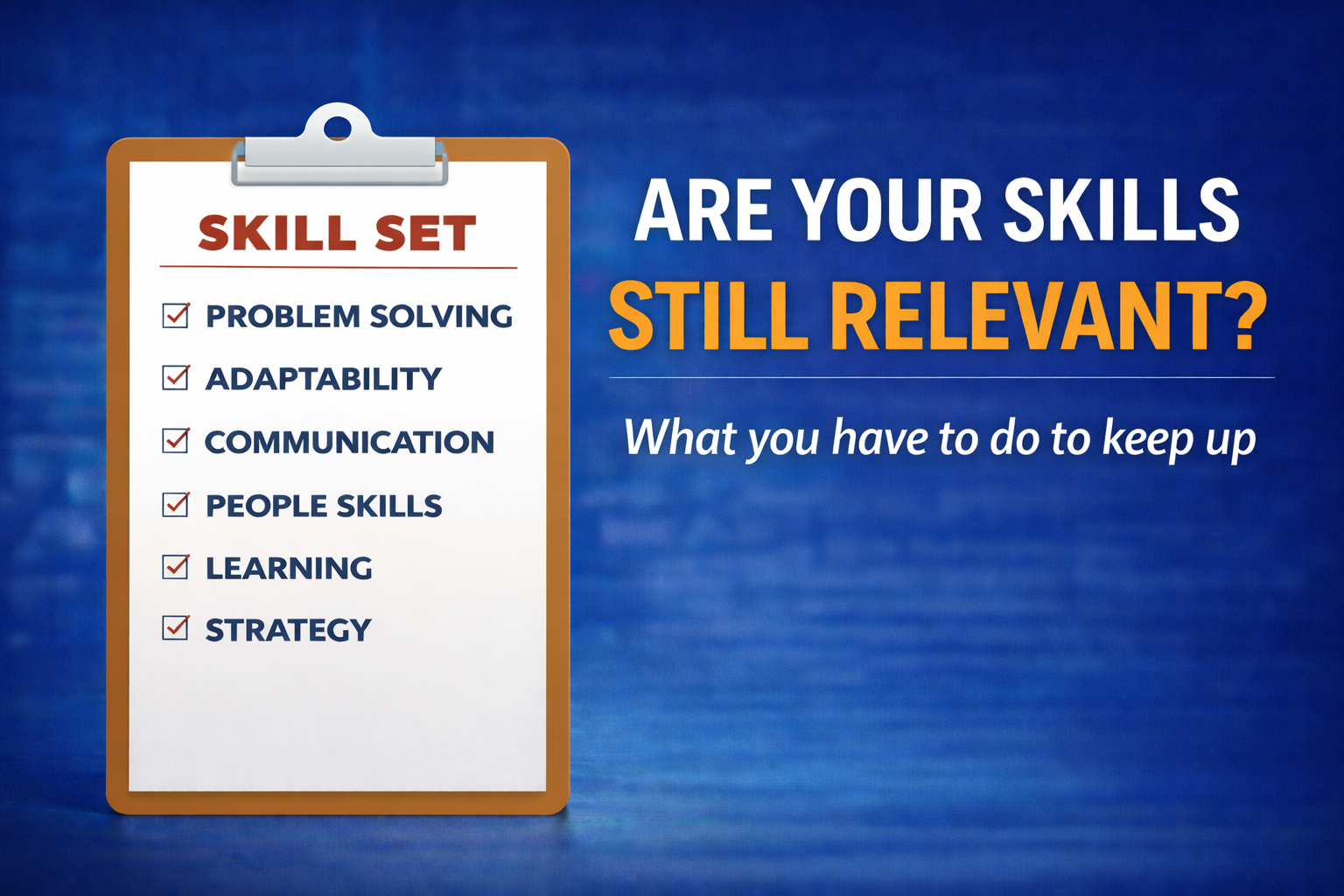
Certain skills keep their value even as tools and systems change.
- Problem solving – Not just fixing issues, but identifying what actually needs to be solved in the first place.
- Communication – Clear written and verbal communication that makes ideas easier to understand and decisions easier to make.
- Adaptability – The ability to adjust when conditions change without losing momentum or confidence.
- Judgment – Knowing what matters, what doesn’t and when to act.
- Working with people – Building trust, navigating differences and moving work forward through collaboration.
Knowing how your skills are holding up in today’s market and where they may need attention, is often clearer with an outside perspective. Reach out to Career Recruiters Inc.